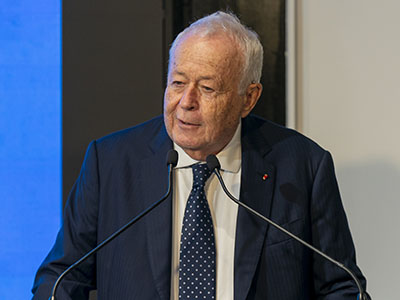
“In the field, we are fortunate to be able to rely on a network of exceptional women and men who work tirelessly to be able to provide a better future for their people. We owe it to ourselves to remain at their side: their courage and determination command respect and give meaning to our commitment.”
From renovating clinical laboratories to building links between them, the Mérieux Foundation helps low- and middle-income countries to improve their diagnostic capabilities in order to promote universal access to high-quality diagnostics and build robust surveillance systems.
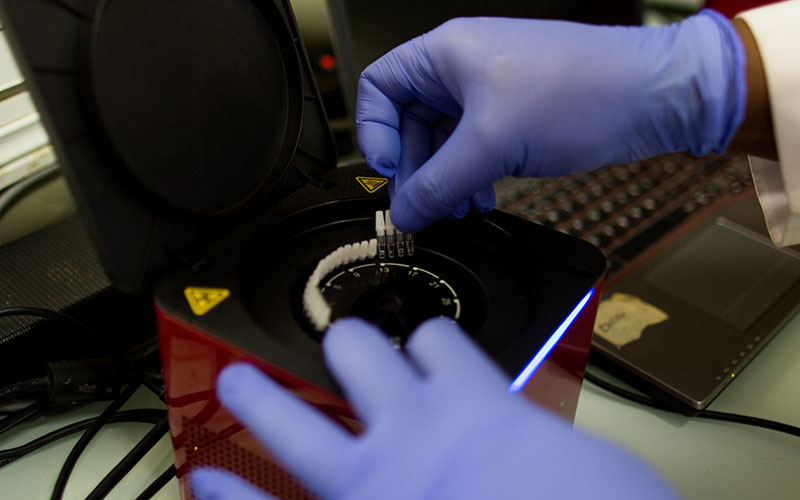
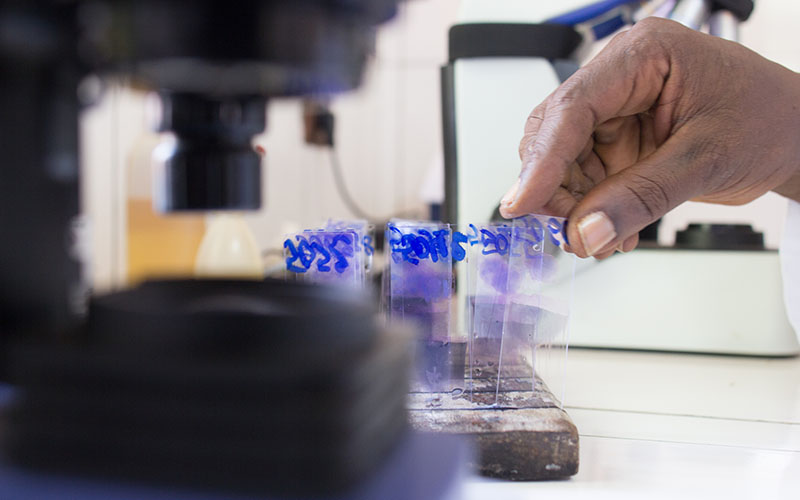
From early screening to implementing appropriate treatment, patient follow-up, and preventing epidemics, laboratory diagnostics are at the heart of an efficient healthcare system. Strengthening clinical laboratories is a key focus of the Mérieux Foundation’s work and encompasses renovating or building infrastructure, training staff, and implementing surveillance systems and networks at both regional and national levels.
Laboratory diagnostics and surveillance in public health
Training and the appropriation of expertise
Our approach is focused on the specific needs of each country and promotes laboratory autonomy through skills development: initial and continuing training is an essential component of all our projects. The Mérieux Foundation is one of eleven entities accredited by the Global Fund for laboratory capacity building.
Networking and sustainable governance
We promote networking as an essential factor in the performance of health systems and the development of coordinated responses to health emergencies. This involves providing support for the establishment of laboratory systems, strategies, and policies, with a view to building robust, sustainable governance.
The Foundation’s work in 2025 was significantly affected by political instability and conflicts in several areas where it operates. In each of the regions where we work, our teams had to adapt—sometimes urgently—to keep our projects on track, and several were scaled back. Wherever we are, we ensure the safety of our staff and partners while maintaining our commitment to beneficiary populations as far as possible.
In 2025, the Mérieux Foundation’s expertise in strengthening clinical biology laboratories was deployed across more than 30 projects in 25 countries
Infrastructure expertise
Virology expertise
Bacteriology expertise
Educational engineering expertise
Quality management system expertise
Biosafety and biosecurity expertise
Laboratory IT systems expertise
Expertise in health surveillance based on laboratories
Expanding HIV viral load testing activities in a crisis context
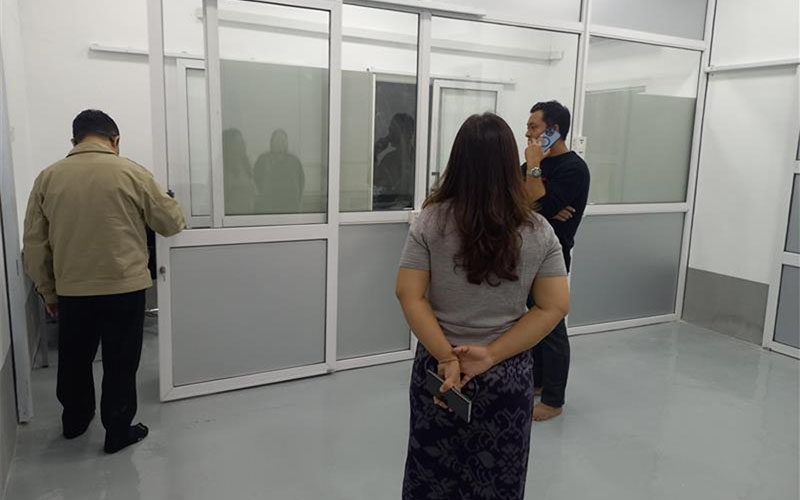
Against a backdrop of severe deterioration in the healthcare system, the Mérieux Foundation launched the second phase of the LabMyNet (Laboratory Myanmar Network) project in 2023 to expand HIV viral load testing and diversify diagnostic provision to prevent or improve the management of other epidemics or endemic diseases. The project involves establishing eight open, versatile molecular platforms in three phases: renovating and equipping laboratories, training staff, and integrating activities into the care pathway, in collaboration with the stakeholders responsible for patient follow-up.
Laboratory renovation for HIV viral load testing under LabMyNet Phase 2
Regarding HIV viral load testing, the target capacity is 6,000 tests per month, which is equivalent to providing virological monitoring for 30% of the 210,000 people living with HIV in the country. The purchase of HIV reagents is financed by the Global Fund.
The year 2025 was marked by a highly complex political situation and significant restrictions on NGOs carrying out HIV-related activities. The LabMyNet project was therefore adjusted to address the realities on the ground and the constraints imposed by the authorities. The eighth and final laboratory began operations in October 2025 in Taungguyi, in Shan state, eastern Myanmar. The target monthly rate of 6,000 tests per month was reached by the end of the year, and all eight laboratories are involved in an external quality assessment program to ensure the reliability of test results over time.
A project rooted in on-the-ground partnerships
Funded by Expertise France’s L’Initiative instrument, LabMyNet is being implemented with a number of public partners, such as the Health Ministry, the Department of Public Health, and the National AIDS Control Program. It receives support from a variety of organizations: The Union, Medical Action Myanmar, UNOPS (United Nations Office for Project Services), Save the Children International, Asian Harm Reduction Network, PSI (Population Services International), MSF Netherlands, MSF Switzerland, and the Myanmar Positive Group.
Improving healthcare and surveillance while addressing gender inequalities
The French Red Cross and the Burundi Red Cross, in partnership with Amref Health Africa and the Mérieux Foundation, have been implementing the AMAGARU YACU project since 2023. Funded by the French Development Agency (AFD) and designed to support the Burundian government’s efforts to strengthen the health system, the project has two goals: to improve the quality of primary healthcare services and to strengthen epidemiological surveillance, with a focus on a key factor: the gender inequalities that impede the right to health and access to care.
Improving the Quality of Primary Health Care Services
The Mérieux Foundation is providing its expertise to the National Institute of Public Health’s National Reference Laboratory in four areas: infrastructure, equipment, training, and quality processes. Several advances were made in 2025, including the renovation of the reception and specimen collection area, the creation of a molecular biology laboratory, the purchase of personal protective equipment and consumables, etc.
A number of skills development activities were also implemented: e-learning about biosafety and biosecurity standards and best practices, training in genomic sequencing (including a practical internship in a laboratory in France), and training on laboratory equipment maintenance (ten technicians were trained in preventive and corrective maintenance and subsequently conducted training supervision in ten laboratories).
Creating a national community of practice to strengthen biosafety capabilities
Already a partner of the National Institute for Biomedical Research (INRB) and the Health Ministry of the Democratic Republic of the Congo, the Mérieux Foundation has been taking part since September 2025 in rolling out a biosafety training module developed jointly with the UK Health Security Agency and funded by the Coalition for Epidemic Preparedness Innovations (CEPI).
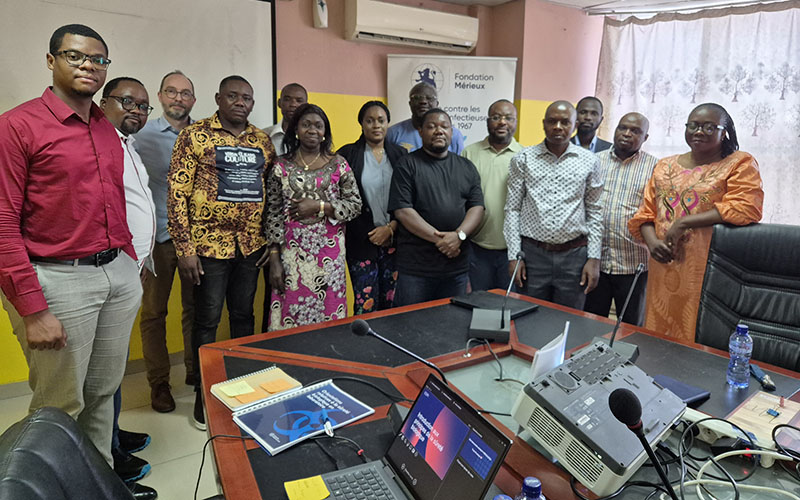
Biosafety training in the Democratic Republic of the Congo
In response to growing biological risks and the need for better preparedness against epidemics, this project aims to create a sustainable system in which biosafety is a shared responsibility, integrated into daily practice in laboratories. The project seeks to foster a national community of practice, promoting procedural harmonization, peer learning, and better coordination between laboratory teams and national authorities.
The project is based on a three-step integrated approach:
The design of an e-learning module based on WHO guidelines.
Training for around a dozen trainers (professionals from four laboratories and the Laboratory Department).
Post-training follow-up, with site visits to support trainers in implementing best practices and disseminating knowledge within their institutions.
The online training module was finalized in 2025 and the train-the-trainer workshop will be held in person in Kinshasa in 2026.
Mentoring to improve antimicrobial resistance surveillance
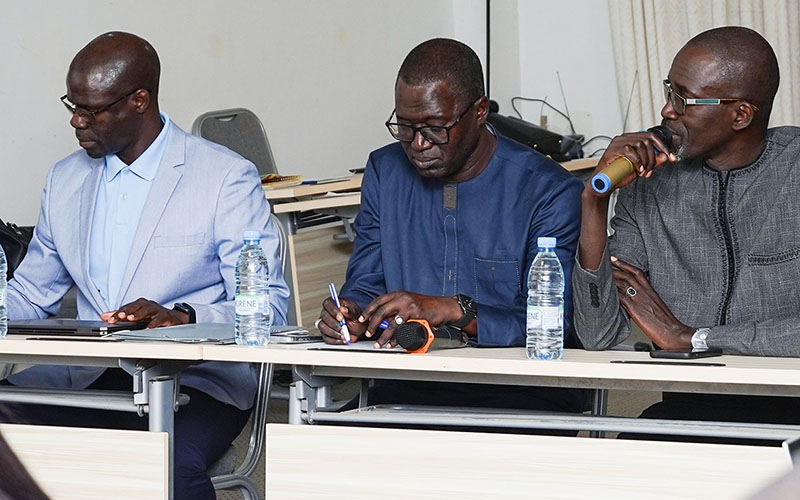
Designed to support skills development in AMR surveillance, the Fleming Fund’s Fellowship Scheme mentoring program promotes peer learning and the creation of One Health communities of practice. The Mérieux Foundation coordinates the program’s activities in Senegal and Laos, and serves as the host institution in both cases.
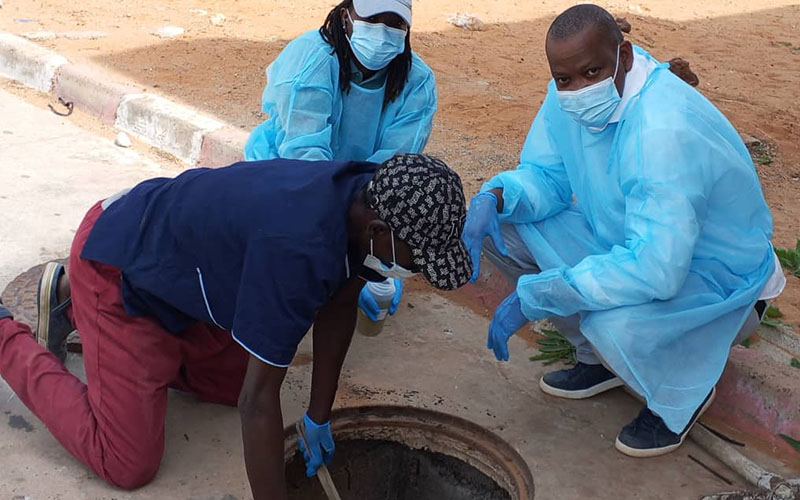
Field Mission to Senegal as Part of the “Fellowship Scheme” Program
Ten fellows were selected in each country, primarily from government institutions, to strengthen national capability to respond to AMR. A key component of the program is the implementation of a collaborative project that puts the skills acquired during training into practice. In each country, the project must engage a broad range of stakeholders, fostering cooperation and a shared vision across human, animal, and environmental health.
In Senegal, in 2025, several fellows took part in advanced courses organized by the Mérieux Foundation (on epidemiology, diagnosis, and AMR, see page xx) and in statistics training to make better use of the information from surveillance systems. An initial on-the-ground mission took place in Saint-Louis from April 14 to 18, 2025, in preparation for the collaborative project, which focuses on implementing integrated AMR surveillance in two regions of Senegal. The goal is to map resistance hotspots using water samples to detect the presence of resistant Enterobacteriaceae. The purpose of this mission was to select sentinel sites associated with the human, animal, and environmental sectors.
In Laos, the fellows took part in several events and training sessions, such as the International Conference on Infection Prevention and Control in Geneva, the updating of the National Strategic Plan on AMR, the pilot training course “Combating AMR at local level: the One Health approach in practice,” which led to the production of materials in Lao and Hmong for World AMR Awareness Week 2025. The collaborative project was launched under the supervision of the French Agricultural Research Center for International Development (CIRAD). It aims to produce a situational and institutional assessment of AMR in Laos.
Creating the conditions for effective AMR surveillance using the One Health approach
The Fleming Fund Country Grant is an international program funded by the British government and managed by Mott MacDonald that aims to strengthen diagnostics and the surveillance of antimicrobial resistance (AMR) in low-income countries, based on a One Health approach. The Mérieux Foundation was chosen to coordinate the program in Laos and Senegal. These activities support the implementation of national AMR surveillance programs and encourage knowledge sharing and the appropriate use of antibiotics.
Interprovincial AMR workshop in Laos
Phase II of the program, which was launched in 2024, focuses on the analysis and publication of data for policymakers to ensure the adoption of long-term, ambitious AMR control policies.
In Laos, the project is being deployed in eleven provinces of the country in collaboration with LOMWRU (Lao Oxford Mahosot Hospital Wellcome Trust Research Unit). All the surveillance sites joined the external quality assessment process in 2025 and achieved an average score of over 90%. A point prevalence survey was conducted at each site, and governance was strengthened with the creation of the National Committee for AMR Surveillance and Control.
In Senegal, the project is being implemented with operational support from the Ministry of Health and Public Hygiene and several technical departments and services involved in health security. Based on an assessment of needs at the sentinel sites, initial support was provided in 2025, particularly in the area of skills development. National strategies for AMR surveillance, as well as the use and consumption of antimicrobials, were also finalized.
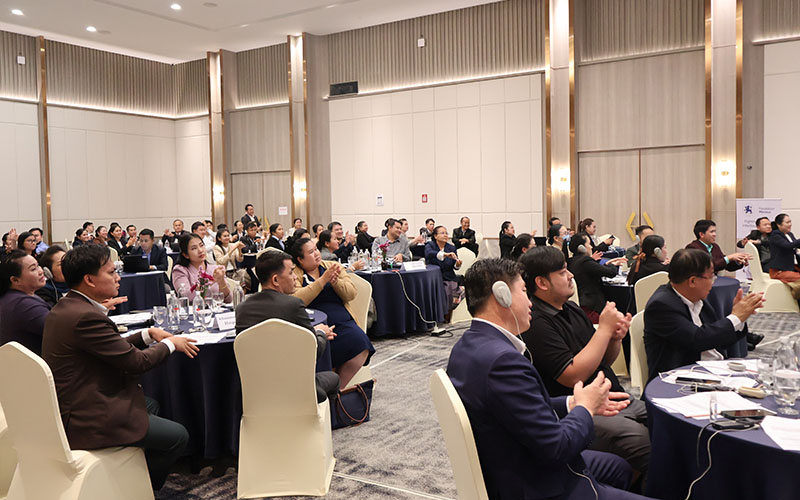
An inter-province AMR workshop in Laos
As part of the Fleming Fund project, the Mérieux Foundation organized a workshop on March 19 and 20, 2025, entitled “Better analyses, better infection prevention, better antibiotic management.” As part of the national AMR action plan, the event brought together around a hundred healthcare professionals from Laos to focus on common objectives: optimizing the prescription and use of antimicrobials, improving data quality, and strengthening dialog between clinicians and laboratories for better coordination in hospitals.
Supporting clinical engagement in the fight against AMR
The Mérieux Foundation has led the consortium in charge of the Regional Grant Africa project financed by the Fleming Fund since 2024 as part of its commitment to combating antimicrobial resistance (AMR). The Foundation is working with UK’s Oxford and City St George universities, the other two members of the consortium, and collaborating closely with the coordinating entities in each of the eleven African countries where activities are being carried out through 2026.
A major milestone was reached in 2025 with the development of an automated dashboard to enable rapid, standardized analysis of antibiotic prescribing practices in line with the WHO’s AWaRe recommendations on the proper use of antimicrobials (see box). A study was also conducted in ten hospitals in Nigeria and Kenya to estimate the scale of antimicrobial resistance associated with bloodstream infections and sepsis. Advances at national level include the publication of a guide on specimen collection and transport in Zimbabwe, and the finalization of train-the-trainer materials in Senegal.
This program of technical assistance for clinical activities has three main objectives:
Improving patient care by developing skills and collaboration within healthcare teams (clinicians, nurses, laboratory technicians, etc.)
Guiding treatment recommendations and preventive measures by analyzing laboratory data on the local bacterial ecology and the resistance identified.
Improving antibiotic prescribing by formulating recommendations and setting up committees on the proper use of antimicrobials.
A decision support tool accessible to all
The prescribing practices analysis tool developed with the aid of the Fleming Fund grant was officially launched in November 2025 during an international webinar attended by 137 participants (from 57 countries, including 12 in Africa), including hospital physicians, researchers, representatives of health ministries, and policymakers. The tool and associated resources are freely available, allowing countries to adapt the dashboard to their national guidelines and local priorities.
Training as many people as possible in laboratory quality management
Training laboratory staff is one of the priorities of the Mérieux Foundation’s Quality Initiative, launched in 2014. As well as the modules delivered to Initiative members involved in international certification processes, an innovative training program in the form of a MOOC (Massive Open Online Course) was developed in 2019 with the support of the AFNOR Group and the Institut Pasteur. This intensive, free course covers the fundamentals of quality and how it permeates through all laboratory processes. The “Quality Management in Medical Laboratories According to ISO 15189” MOOC consists of six one-week sessions and emphasizes interactivity as a learning aid through innovative educational resources and tools: videos, quizzes, discussion forums, etc.
In 2025, the fifth edition of the MOOC began on October 6th on the France Université Numérique platform, with more than 2,600 participants from 54 countries. As in previous years, two sequences were offered: the “Knowledge” sequence, completed by 358 learners, and the “Skills” sequence. The final assessment of the second sequence resulted in 119 completion certificates being awarded. Since it was created, the MOOC has trained nearly 19,600 participants, with a very high engagement rate, as shown by the high level of interaction on the forums, the live events, and the active community on the LinkedIn professional network.
What is laboratory quality?
The quality of a laboratory is defined as its ability to provide accurate, reliable results at the right time for the lowest cost. Adopting a Quality Management System is a necessary but complex step, which is why the Mérieux Foundation launched its Quality Initiative. This program supports laboratories in countries with limited resources in their continuous improvement approach, with the goal of obtaining ISO 15189 accreditation (an international standard specific to medical laboratories). Nine Rodolphe Mérieux Laboratories have joined the Quality Initiative, and four have already received accreditation.
Assessing the current state of tuberculosis diagnosis to make it stronger
As part of its “NextGen Market Shaping” approach, the Global Fund is supporting a program to assess tuberculosis diagnostic infrastructure in several priority countries. The goal is to scope the introduction of large-scale screening innovations, making it possible to decentralize diagnostics to the peripheral levels of health systems while reducing the time it takes to obtain results.
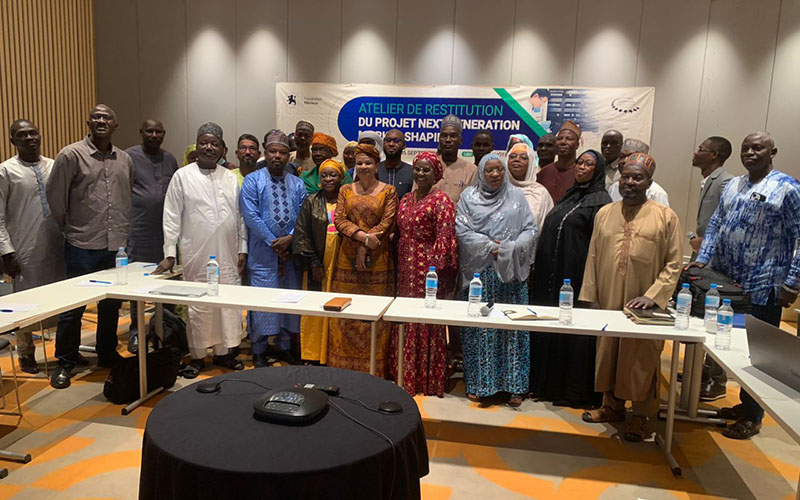
Feedback workshop on tuberculosis diagnostics under the Next Generation Market Shaping project
The Clinton Health Access Initiative was tasked with leading the project in twenty countries and selected the Mérieux Foundation to implement it in two of them: Chad and Niger.The objective is to map diagnostic systems linked to National Tuberculosis Control Programs and estimate the demand for rapid detection tests. This work was conducted in the spring of 2025, using a forecasting model to estimate the total number of tests needed to guarantee that all suspected tuberculosis cases could be screened between 2026 and 2029.
The Foundation’s study resulted in several scenarios for achieving universal coverage based on the integration of new molecular detection tools into existing care networks. As well as informing strategic procurement planning in both countries, these findings contribute to global advocacy for easy, affordable, fair access to diagnostic innovations.
Shaping next-generation markets
Launched in 2022, the Global Fund’s “NextGen Market Shaping” program aims to lower the barriers to the availability of affordable health products. In terms of tuberculosis screening, the WHO recommends the adoption of low-cost rapid molecular diagnostic tests to combat under-diagnosis in low- and middle-income countries. In Niger, only 25% of notified cases were covered by rapid molecular diagnostic tests in 2024. In Chad, the figure was 45% in 2023.
Fifteen years of a regional approach to strengthening laboratory systems for the long term
The quality of biomedical laboratory services cannot be improved sustainably without robust governance of laboratory systems. This conclusion is central to the mission of RESAOLAB, the West African Network of Biomedical Analysis Laboratories, which comprises seven member countries: Benin, Burkina Faso, Guinea, Mali, Niger, Senegal, and Togo. RESAOLAB has been working for over 15 years to strengthen laboratory systems, focusing on two priorities: supporting national institutions and facilitating structured regional cooperation.
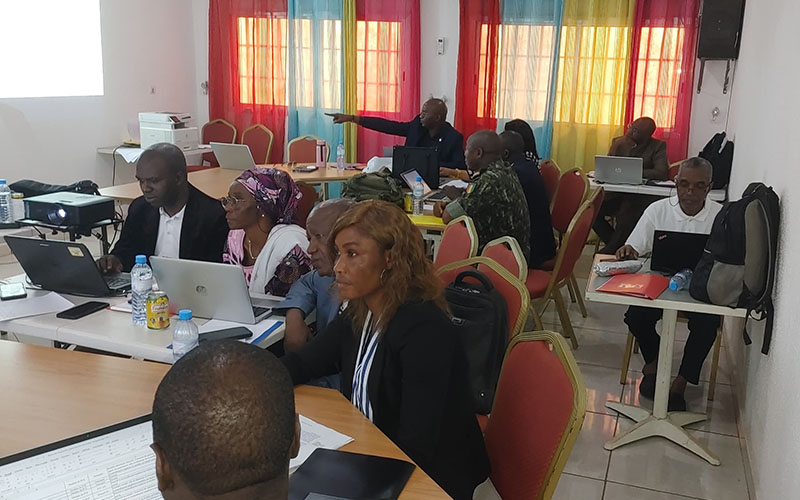
RESAOLAB Stakeholders Meet at a Workshop
The third phase of the program was launched in 2019 with support from the French Development Agency (AFD). Due to changes in the geopolitical context in the subregion, AFD funding for activities in Mali was halted in 2022, and in Niger and Burkina Faso in January 2024 following a temporary suspension announced in 2023.
Support activities continued across all components of the program in 2025: quality supervision, coordination of national networks, training grants, fostering regional collaboration, etc. In Benin, a training workshop on diagnostic method verification and validation was held in February and March 2025 in order to improve the reliability and accuracy of the results provided by laboratories. In Senegal, the Laboratory Department launched the first phase of an organizational audit to optimize the national strategic plan, with an operational review workshop held from April 8 to 11, 2025, in Thiès.
RESAOLAB beyond RESAOLAB
Based on close collaboration with health ministries, RESAOLAB has become a platform for mobilizing expertise, sharing experience, and advocating for the pivotal role of diagnostics and the need for clear, recognized, well-resourced governance. In 2025, the final year before the project’s scheduled closure in the first half of 2026, RESAOLAB members decided to ensure the network’s long-term continuity by establishing an association based in Guinea.
Strengthening provincial hospital laboratories in Bolikhamxay and Vientiane provinces
Professionalizing diagnostic services in provincial hospital laboratories
This project is being carried out with financial support from the Luxembourg Cooperation, which funded the construction of the Bolikhamxay provincial hospital opened in 2018, with support from the Foundation. The project’s expansion since 2023 includes the deployment of an inter-province training program, laboratory refurbishment, and the creation of new facilities in the provinces of Bolikhamxay, Vientiane, and Khammouane.
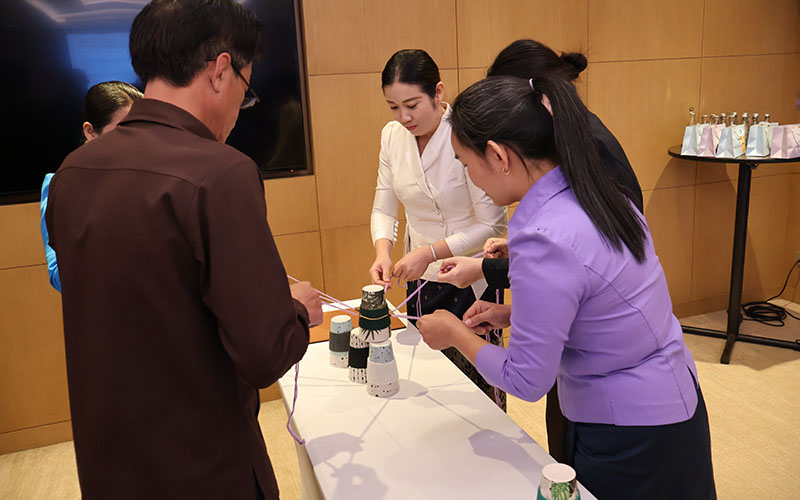
Leadership and team-building workshop in Vientiane
In collaboration with the provincial health department and the national reference laboratory, the National Center for Laboratory and Epidemiology, the Mérieux Foundation is contributing its expertise in laboratory support with the aim of improving quality, optimizing management processes, and fostering leadership among laboratory managers.
The Foundation carried out a variety of activities in 2025: site visits to coach and mentor laboratory directors, training sessions to facilitate the understanding of test results, meetings for prescribers and laboratory staff to share experiences, etc. Quality audits were also conducted, and four new provincial laboratory managers completed the laboratory management training program at Chiang Mai University in Thailand thanks to scholarships awarded by the Foundation.
Leadership workshop in Vientiane
On March 11 and 12, 2025, the Mérieux Foundation organized an inter-province workshop on leadership and team building designed to strengthen the skills of laboratory managers and promote teamwork. Adopting a dynamic, interactive approach, the workshop enabled participants to deepen their knowledge while forging strong bonds with colleagues from other provinces, laying the groundwork for a strengthened commitment to collaboration for more effective management of hospital laboratories across the country.
Technical assistance to the national laboratory department
Supporting the external quality assessment of tuberculosis and AMR programs
Launched in late 2024, the technical assistance project for the National Laboratory Department in Guinea was implemented with support from the Global Fund. The project emphasizes a participatory, consultative approach through assessments, meetings, workshops, and capacity-building initiatives.
Workshop organized by the National Laboratory Directorate with representatives from structures within Guinea’s national laboratory system
The Mérieux Foundation provides support for the development and organization of sustainable external quality assessment programs in two areas:
Tuberculosis diagnosis in collaboration with the National Reference Laboratory for Mycobacteria
Antimicrobial resistance (AMR) surveillance in collaboration with the National Institute of Public Health
In 2025, the National Laboratory Department validated a national guide for external quality assessment in biochemistry, hematology, and clinical bacteriology (see box). Progress has been made in the fields of microscopy, molecular biology, and AMR. Maintenance and inventory work also led to the development of an equipment registry, a budgeted maintenance plan, and a training plan for biomedical engineers.
Validation of a national reference guide
“This national guide to external quality assessment results from active collaboration between all health stakeholders, an aspect that is central to the ambitions of the third phase of RESAOLAB. It is a key component of the continuous improvement of diagnostic quality, which will contribute significantly to improving the quality of the results provided to patients,” emphasized Dr. Sékou Niouma Camara, Prefectural Director of Health for Coyah, during the workshop organized by the National Laboratory Directorate from September 17 to 20, 2025, attended by 23 participants from 15 facilities within Guinea’s national laboratory system, made possible by the third phase of RESAOLAB.