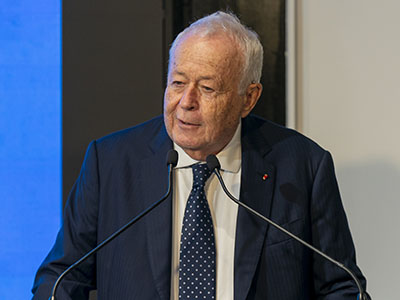
“In the field, we are fortunate to be able to rely on a network of exceptional women and men who work tirelessly to be able to provide a better future for their people. We owe it to ourselves to remain at their side: their courage and determination command respect and give meaning to our commitment.”
In partnership with National Tuberculosis Control Programs and scientific and academic organizations, the Mérieux Foundation organizes research projects aiming to lessen the burden of tuberculosis by improving early detection, prevention, and care for children and vulnerable populations.
Improving the diagnosis of pediatric and extra-pulmonary tuberculosis
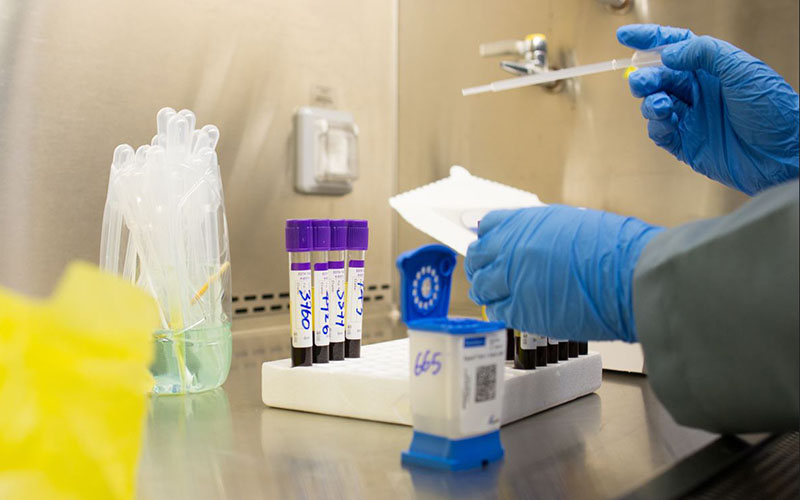
Launched in 2022, the DEDICATE project (Blood-based diagnostic of paucibacillary TB in Bangladesh) is part of the WHO’s plan to combat tuberculosis, with the goal of reducing under-diagnosis of two specific forms of the disease: pediatric tuberculosis and extra-pulmonary tuberculosis. These paucibacillary forms of the disease, presenting small quantities of pathogens, are difficult to detect using conventional methods based on analyzing sputum samples, which are also particularly difficult to collect from young children.
Improving pediatric tuberculosis diagnosis under the DEDICATE project
The study’s results were presented at the World Conference on Lung Health in Copenhagen in November 2025 by Ashabul Islam, a student at icddr,b (International Centre for Diarrhoeal Disease Research, Bangladesh) and the winner of the 2024 GABRIEL prize for young scientists for his work on this project. The results obtained among children were published in the scientific journal IJTLD Open in 2025.
Funded in partnership with the AnBer Foundation, and with a one-off donation from bioMérieux shareholders, DEDICATE is conducted with the operational support of icddr,b and Cepheid.
DEDICATE project: publication on pediatric tuberculosis diagnosis
On July 9, 2025, the scientific journal IJTLD Open (International Journal of Tuberculosis and Lung Disease) published an article on the results of the DEDICATE project in children: “Diagnostic accuracy of RISK6 assay in childhood pulmonary TB.” Though it does not achieve the performance criteria set by the WHO for a complete diagnostic test, the results show that the RISK6 blood test remains promising as a triage test. This publication is part of a series of articles published by the International Union Against Tuberculosis and Lung Disease (The Union), seeking to improve pediatric tuberculosis diagnosis.
Improving the distinction between tuberculosis and pneumonia in children
Launched in Bangladesh in July 2025, the RISK4Kids study aims to provide a solution to the difficulty of distinguishing tuberculosis from pneumonia in children due to overlap between their clinical symptoms (cough, fever, and respiratory distress) and the lack of reliable diagnostic tools. These complications in making a diagnosis contribute to high rates of inadequate treatment and the emergence of antimicrobial resistance.
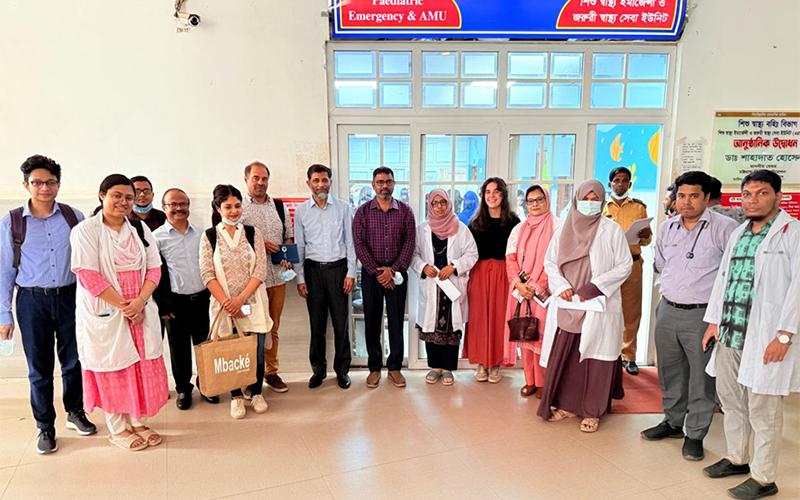
Collaboration between hospitals and research centres under the RISK4Kids project
In order to facilitate differential diagnosis of tuberculosis and pneumonia in children, the study sets out to assess two rapid triage tools used individually or in combination: blood biomarkers and the measurement of blood oxygen saturation. Additionally, the study will trial artificial intelligence in the interpretation of pulmonary X-rays. Conducted directly in hospital settings, RISK4Kids will be rolled out to children under ten presenting signs of respiratory infection.
The preparatory steps for the study were carried out in 2025: protocol validation, obtaining the agreement of local ethics committees, regulatory compliance ensured by the Mérieux Foundation in its role as promoter of the study, harmonization of documentation, and procurement of reagents and consumables. Recruitment began in October 2025.
The RISK4Kids project emerged from cooperation between several Bangladesh hospitals, BITID (Bangladesh Institute of Tropical and Infectious Diseases), icddr,b (International Centre for Diarrhoeal Disease Research, Bangladesh), and the Mérieux Foundation, with financial support from the AnBer Foundation.
A better distinction between pediatric pneumonia and tuberculosis is urgent
Current diagnostic methods for tuberculosis and pneumonia often rely on invasive samples, which are difficult to collect from children. In contexts where medical resources are limited, developing simpler tools that can be used in close contact with the patient is a priority for differentiating between the diseases earlier and more effectively. This distinction is vital to guarantee appropriate treatment and save lives.
Defining recommendations for eliminating tuberculosis among vulnerable populations
The Mérieux Foundation has been supporting the diagnosis and research activities of the National Tuberculosis Control Program in Lebanon since 2018, against a backdrop of alarming deterioration in the country’s healthcare infrastructure. In the absence of up-to-date national recommendations for the diagnosis and treatment of tuberculosis, the Foundation conducted a study taking into account the specific demographic and epidemiological features related to the presence of several high-risk populations in Lebanon: migrants, health workers, contact cases, and prisoners.
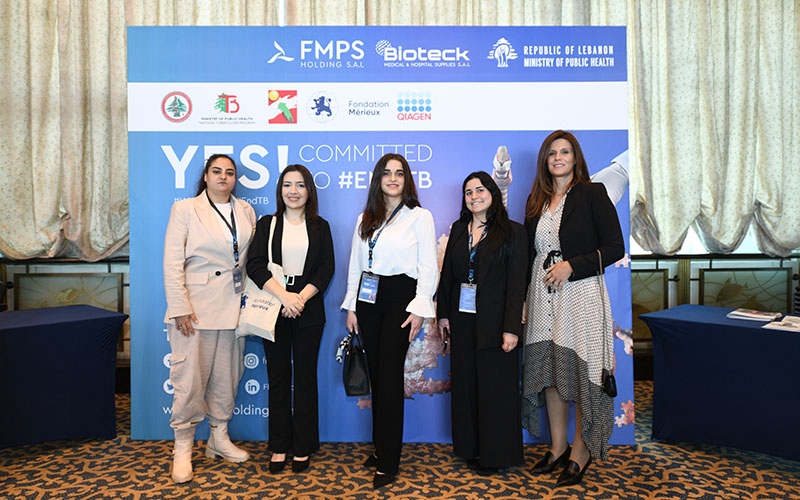
Meeting on TB recommendations under support to the national tuberculosis program
In 2025, the conclusions of this work led to the establishment of new national recommendations for the screening of tuberculosis. These conclusions were presented at the first meeting organized by the Lebanese health company FMPS Holding to mark World Tuberculosis Day on April 4, 2025.
The work also contributed to the publication of the report entitled “Tuberculosis at the crossroads: urgent action for migrant and refugee health in a turbulent era,” in BMJ Global Health in September 2025. Due to its strategic role in Lebanon, the Mérieux Foundation was asked by the WHO, in partnership with the Qatar Foundation, to contribute to this report, which put forward strategic political recommendations for combating the disease amid crises and budget restrictions.
Funding for a thesis on Mycobacterium tuberculosis
Since 2023, the Mérieux Foundation has been supporting the microbiology doctoral thesis work of the biologist in charge of the Rodolphe Mérieux Laboratory in Beirut. Conducted at Paris Cité University’s doctoral school, it deals with the impact of polymorphism in candidate genes for resistance to new tuberculosis drugs. In 2025, the partial results of sequencing the complete genome of Mycobacterium tuberculosis strains were presented to the ESCMID congress (European Society of Clinical Microbiology and Infectious Diseases) in Vienna, and a scientific article was published in an international peer-reviewed journal. The thesis will be defended in 2026.