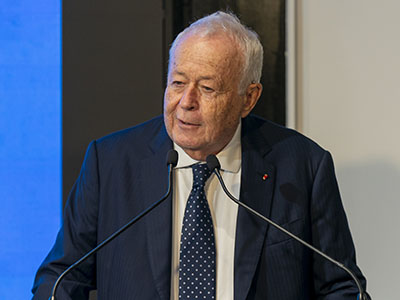
“In the field, we are fortunate to be able to rely on a network of exceptional women and men who work tirelessly to be able to provide a better future for their people. We owe it to ourselves to remain at their side: their courage and determination command respect and give meaning to our commitment.”
As part of its collaboration within a network of international experts, the Mérieux Foundation organizes scientific gatherings on medical advances and important subjects in the fight against infectious diseases. These events contribute to the goal of spreading knowledge, developing coordinated global strategies and strengthening the prevention of epidemic and pandemic risks.
Contributing to the development of integrated prevention and management strategies for arboviral diseases
From December 8 to 10, 2025, the Mérieux Foundation organized a high-level international event dedicated to arboviral diseases, vector-borne illnesses transmitted by arthropod bites such as dengue, chikungunya, Zika, and yellow fever. Rapid urbanization, climate change, and increased human mobility make it easier for disease vectors to proliferate and expand geographically, exposing ever-larger populations to the risk of infection.
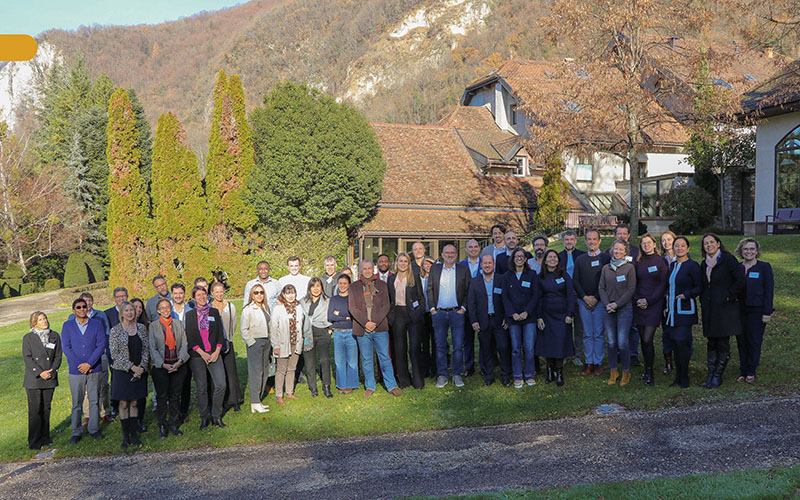
International meeting on arboviruses at Les Pensières Center
The gathering brought together around forty scientific experts, representatives of international organizations and health authorities, researchers, and private-sector players to provide shared insights into the current epidemiological situation in the most affected areas, while encouraging participants to exchange best practices in surveillance, vector control, and epidemic response.
The discussions focused on participants’ experiences involving vaccination, community engagement, diagnostic tools, treatments, as well as research and clinical trials. The conclusions that emerged included the need to take action through coordinated, complementary approaches and to develop integrated strategies for managing arboviruses. The event was organized with backing from the WHO and financial support from Takeda Pharmaceuticals, Valneva, and Sanofi.
New global momentum against arboviruses
The global framework for the fight against arboviruses is evolving in 2026 with a merger between two pre-existing initiatives – the Eliminate Yellow fever Epidemics (EYE) strategy and the Global Arbovirus Initiative (GLAI) – to form the new WHO global program on arboviruses. The aim is to boost global health efforts against priority diseases through a unified strategy incorporating the multisectoral nature of arboviral diseases (climate-sensitive, vector-borne, avoidable through vaccination, and relevant to the “One Health” approach). The program will draw on the progress, achievements, and lessons of previous work to combat all arboviral diseases through a collaborative, interdisciplinary framework.
Strengthening regional cooperation to eliminate hepatitis
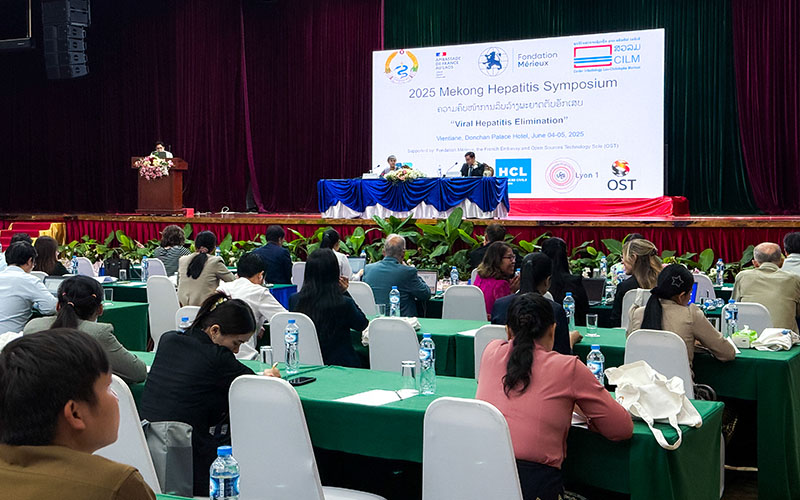
After several virtual gatherings, the Mekong Hepatitis Symposium returned to a face-to-face format from June 4 to 5, 2025, in Vientiane, Laos, attended by clinicians, researchers, and experts from South-East Asia. Launched in 2012 by the Laos Ministry of Health, the symposium now reflects a unique collaborative effort involving Australia, Cambodia, China, India, Myanmar, Thailand, and Vietnam, . This major regional event, organized by the Center of Infectiology Lao-Christophe Mérieux, is recognized as a key platform for sharing knowledge about hepatitis and aligning national policies.
Mekong regional hepatitis symposium in Vientiane
In 2025, the symposium opened with speeches by Laos’ Minister of Health and the French Ambassador. Several recent clinical studies were presented, including a study of vaccination in newborns in the Laos and in Thailand, and innovative case detection models in Cambodia and Vietnam. Treatment strategies and long-term complications, such as cirrhosis and liver cancer, were also discussed. At the close of the event, the scientific committee issued recommendations and renewed its call for cross-border collaboration. The aim was summarized by Dr. Soe Thet Lwin of the Asian Harm Reduction Network in Myanmar: “We must move from fragmented efforts to integrated treatment models, particularly for the most exposed populations.”
The 2025 hepatitis symposium received operational support from the Laotian company Open Sources Technology Sole and partners including the French Embassy in Laos, Chiang Mai University in Thailand, INSERM, and the Institut Pasteur in Cambodia.
A region under pressure
With the region committed to achieving the WHO’s target for eliminating the disease by 2030, the 2025 Mekong Hepatitis Symposium underlined the importance of local leadership, regional unity, and innovation based on reliable evidence. “Progress is being made, but gaps remain,” noted Dr. Paboriboune of the Center of Infectiology Lao-Christophe Mérieux. “One of our missions is to highlight local innovations and encourage scalable strategies, from remote rural areas to national health systems.” With a prevalence rate of hepatitis B of 4% to 6% and the highest incidence of liver cancer in the world, Laos faces a particularly concerning challenge, illustrating the urgent need for concerted efforts to detect, treat, and prevent hepatitis.